
A soul-searching journey to Ladakh, India’s last Shangri-La
BY SUBHASHISH CHAKRABORTY | PHOTOGRAPHS: TUTC
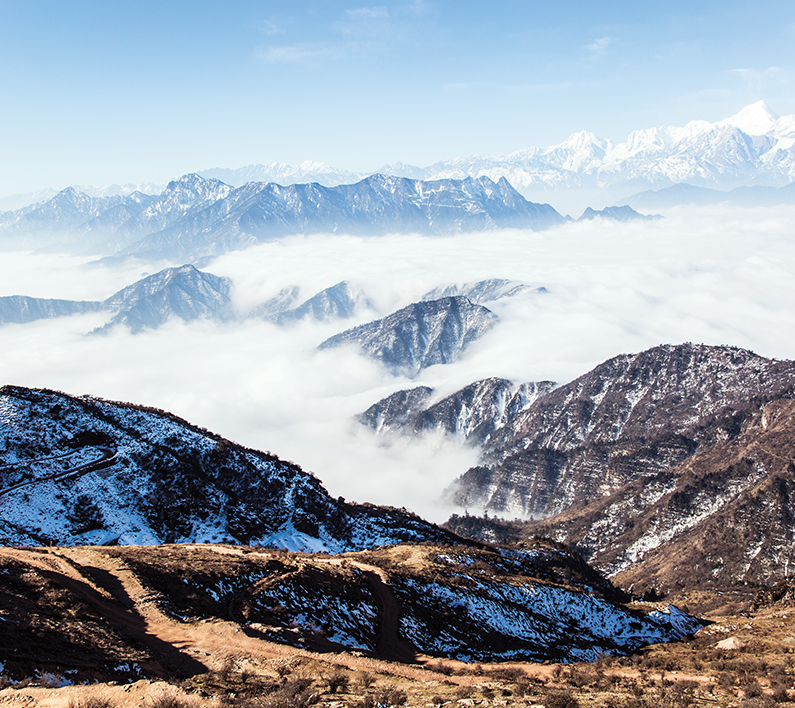
Ladakh is India’s last Shangri-La and the only cold desert with towering peaks, all above 3,000 metres, almost touching the sky, makes for a magnificent kaleidoscopic vignette. Out here it’s a rarefied world; population is sparse and the climate is extremely harsh, especially in the winters (-20 degrees Celsius).
Some of the world’s highest mountain passes are located here and the world’s highest saltwater lake – the breath-taking Pangong Lake offers stunning Himalayan vistas. This land never ceases to amaze you – frozen lakes, the world’s highest battlefield (Siachen Glacier), awe-inspiring terrains ideal for treks (Stock Kangri, Nubra Valley, Stock Kangri) and some of the highest Buddhist monasteries in the world where sacredness finds fulfilment.
Since my brother who worked with an airline company was posted in Leh, the capital of Ladakh, I naturally made Leh the base to explore Ladakh. The 15-day Ladakh odyssey offered me with an opportunity to explore an India I never knew existed.
Leh: picturesque and zen vibes
Hats off to whosoever coined the phrase “Life is either daring adventure or nothing at all.” Being a one-time native of the Eastern Himalayas, I have been surrounded by mountains most of my life; yet, Leh was an extraordinary surprise – jaw-dropping panorama and magical starlit nights. The old Leh neighbourhood in particular was truly an aesthetic delight, conspicuous by its distinctive Tibetan style edifices, lively bazaars and curio shops. Walking through the bridle pathways, you can’t stop raving about the beautiful Tibet-inspired Ladakhi homes.
Most visitors to Ladakh choose Leh for acclimatisation and then make their forays to the higher and desolate regions where the air is rarefied.
In the days of yore, Leh used to be a trading hub with linkages with Central Asia and Tibet. Remnants of the past still exist, courtesy those rather broadened pavements paths for easy movement of horses and camels.
However, the cynosure of all eyes is the magnificent Leh Palace – all of nine storeys and built to perfection in much the same architectural pattern as the world famous Potala Palace of Lhasa – the seat of Tibetan Buddhism and His Holiness the Dalai Lama’s winter retreat. This one-of-a-kind palace was built way back in 1630s by Sengge Namgyal, the erstwhile king of Ladakh
As one acclimatises in Leh for bigger and more daring adventures in the upper reaches of Ladakh, the slow unhurried life and the sight of older folks silently counting their “mala beads” on finger tips in itself is a reflection of the deep-seated tranquil mind of the Ladakhi. Ladakh changes your perception of life and the sacredness of the place is very palpable. Here in Leh, counting your beads and remaining peaceful is given priority over trade and commerce, which makes mindful exploration so soothing an endeavour.
While in Leh, make it a point to visit the three most coveted monasteries – Shey, Thiksey and Hemis monasteries. The Shey Monastery is actually inside the premises of the magnificent Shey Palace. This is the summer retreat of Ladakh’s royal family. The Tibetan architecture and the hallowed ambience are palpable and pretty meditative. The huge golden statue of The Buddha draws your mind inwards and visiting spiritualists can be seen deeply engrossed in chanting powerful holy mantras and invoking the divinity within.
From Shey monastery one can easily reach the Thiksey monastery, which is in close proximity. Here again, on a hill top The Buddha comes alive. The Thiksey monastery is your second passport to Lhasa’s Potala Palace because the architectural similarities are so profound. No wonder, on any given day, this one-of-kind monastery offers food, clothing and spiritual shelter to Buddhist pilgrims who come from faraway lands in search of spiritual growth and upliftment.
The drive to Hemis Monastery, easily the most admired is gorgeously located, tuck on the banks of the holy Indus river. This monastery is amongst the very few where the “Dugpa Kargyutpa” sect of Buddhism or the “Red Hat” sect of Buddhism is practised. The monastery has one of the richest collections of Thangka paintings anywhere in the world and comes alive during the Hemis Festival – the annual birthday celebration of Guru Rinpoche
Spending time with resident monks was a revelation, some of whom speak decent English. Ladakh’s Buddhist heritage is not just rich, but also one of the best places outside of Tibet to practise Buddhism. It has played the role of an “empathiser” to the greater Tibetan cause for centuries together and has a rich history of cultural exchanges from ancient times. Be it Ladakhi monks migrating to Tibet for education, the architectural similarities and finesse of monasteries or trade and commerce through the ancient Silk Route.
Nubra Valley: cold deserts and a sense of eternity
Nubra Valley is evocative of stunningly diverse landscape, sand dunes and hilltop Buddhist monasteries. The average altitude is approximately 3,048 metres and we choose the route via Khardungla Pass – world’s highest motorable pass, which is all of 5,359 metres.
The journey itself is of epic dimensions, 160 km and took us about four-and-a-half hours, passing through vantage locales like Khalsar, Panamik and Sumur. This is one for the lifetime! Ideally an early morning departure from Leh allows you the freedom to take intermittent breaks along the route. We halted at a roadside cafe in Khardungla for breakfast and proceeded onwards to Nubra Valley. The drive from Khalsar to Sumur was surreal to say the least; the villages in particular.
At such rarefied heights, you need to have your logistics right; be it a tented accommodation, a glamping unit, homestay or an experiential camp, the choice is yours and it is advisable to choose a trusted brand who can deliver an authentic Himalayan experience – innovation is the key and the trips to the hinterlands, the cultural immersion and opportunities to spend time with local communities often play a pivotal role in unlocking the fascinating socio-cultural diversity of Ladakh.
The first night at Chamba Camp, Diksit was the stuff of fairytales – the starlit night sky, luxury tents offering 360-degree views of the Himalayan panorama, king-sized beds to curl on, immaculate furnishings and all miscellaneous amenities further heightened the Himalayan aura.
Here at Nubra Valley, the unending luxuriant orchards on the backdrop of the Himalayan peaks transport you to a surreal world. Visiting remote villages like Panamik and Sumur offered us with a peek into the fascinating rural life of Ladakh. The sight of Bactrian camels grazing on the valley, the Buddhist Prayer Flags flickering and the undulating golden hued sand dunes; especially the barefoot walking that was so restorative!
In the good old days, the double-humped Bactrian camels were an integral of the trading route and were used for transportation of goods to Central Asia. They are blessed with stupendous powers of endurance and can easily survive in harsh terrains. A camel ride in Nubra Valley could be an exhilarating experience.
The joy of monastery-hopping
At Nubra Valley, slowing down and resetting your body’s rhythm occurs naturally. Both Sumur and Panamik villages offer a multitude of trekking options and the one which is much preferred by visitors is the trek to the mythical Yarab Tso lake where the ancient and sacred “Om” sound reverberates.
To deepen your connection with the spiritual energy of Ladakh, a visit to the Samstanling Monastery in Sumur Village and the Ensa Monastery in Panamik village could be a very transformative, peaceful and restorative experience. While Samstanling isn’t all that hard to reach, the 400-year-old Ensa monastery demands a four-hour trek. But once you reach the monastery premises, the sight of ancient Stupas/Chortens and the unique “Dukhang Yokma” architecture grabs your attention.
This hilltop monastery by the banks of the Siachen river has played the role of a “guardian angel” for the people of Nubra valley. Needless to stay, the monastery is a revered place of worship and the resident Lamas, some barely into their teens, are a source of inspiration to the locals.
Since we had our camp at Diskit, the local monastery popularly referred to as the “Deskit Gompa” in local parlance, was within close proximity and we spent some of the most peaceful times in our lives exploring this old monastery and conversing with the resident Buddhist monks who practice the “Gelugpa” version of Tibetan Buddhism or the Yellow Hat School of Buddhism.
Apart from the magnificent statue of the all-compassionate “Crowned Buddha” there is an in-house “Tibet Support Group” that offers education to children residing in the neighbourhood. I spent a lot of time with one of the teachers who is also a full-time monk and learnt that due to the volatile political situation in Tibet, he was forced to migrate from Tibet, where he still has his extended family.
One evening at the Diskit monastery, the teacher literally came to my tent, put his arms around me in a warm embrace and whisked me to the evening prayer at the monastery. The hallowed sound of ancient Buddhist mantras recited by the monks along with the beating of the drums created a mesmerising spiritual aura that still reverberates within me.
The next day, when it was time for us to leave Diskit, as we were packing our baggage, the teacher-monk again came to us, his eyes welling up to say goodbye!
Monasteries, monks and meditation
Apart from jaw-dropping landscapes, Ladakh is one of the best places to practise meditation and follow Buddhism, particularly Tibetan Buddhism.
Those visitors who come with itineraries curated for ultra-adventures like high altitude trekking and off-roading, spend a couple of days acclimatising in Leh and one great way to reboot your body and mind is by visiting the Buddhist monasteries in close proximity, that doesn’t tax your body; rather it heals you from inside.
Ladakh is one of the last remaining regions on Planet Earth where journeys are authentic, community centric and purposeful. Here, the combination of high altitude adventure along with cultural immersions makes tourism both sustainable and a powerful catalyst for peace in today’s discontented world.
Out here a silent revolution is on. From mountain rallies on some of the world’s highest and toughest terrains to meditating in some of the world’s highest monasteries; combating the impacts of climate change with resilient sustainable tourism practices; monitoring glacial meltdowns to promoting wildlife conservation through respectful wildlife encounters.
Ladakh is both a biodiversity hotspot as well as cultural hotspot. In the rarefied realms of Ladakh Himalayas, cutting-edge technology and scientific research goes hand in hand with the purest and most sublime forms of spiritual practices that offers the message of hope for humanity.